
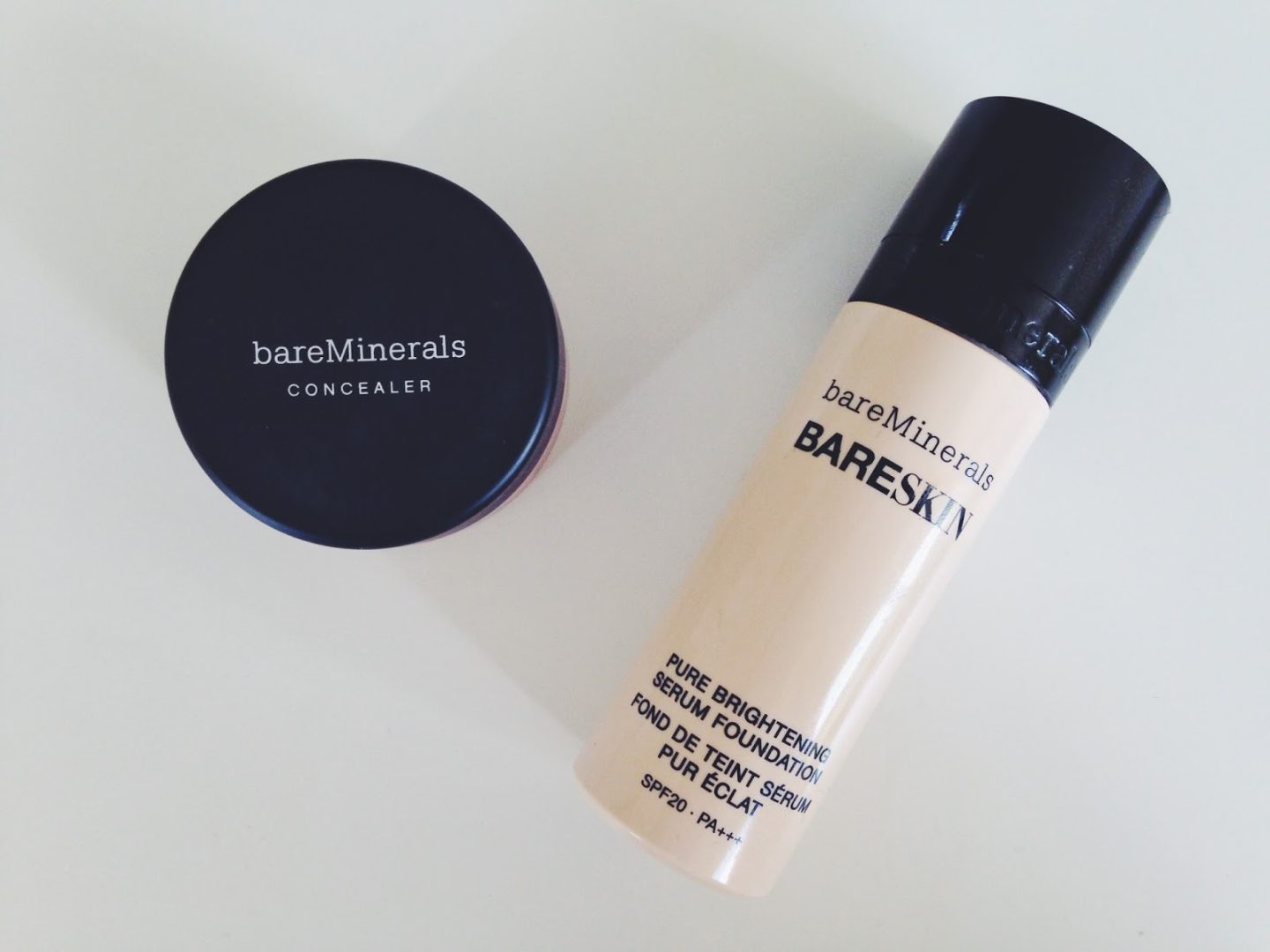
As the second part of my high-street beauty investigation, I take a look into Bare Minerals*, and just how ‘bare’ their cosmetics really are.
A good while ago, I visited my local Bare Minerals counter for a makeup revamp – I wanted a personalised service that still stuck to my natural beauty principles.
My Experience At The Bare Minerals Counter…
Going to the counter was quite a daunting experience, as I’ve never been a fan of critiquing my features in the mirror while strangers helped me try to achieve a new look – hairdressers still is my version of the dentists! However, forgetting that I was being sold a service, I actually had a good time once I had been seated and my own makeup had been gently removed.
The shop assistant who applied my makeup was good in noticing my skin’s condition – at the time, I had quite red, dry cheeks and I wanted to hide that. Instead of just listening to me asking for a coverup though, she first moisturised my skin and then applied Redness Remedy*, a yellow-shaded powder that aims to calm down red tones.
Next she colour-matched my skin to a shade of Pure Brightening Serum Foundation*, applying it with a flat-ended Perfecting Face Brush* and showing me the techniques I needed to recreate it myself. Afterwards she went over any remaining blemishes with an SPF 20 Concealer* – suffice to say, I came away with a beautiful skin tone – but I was caked.
My Thoughts Once I Got Home…
After everything, I bought the redness solution, foundation, and concealer – this set me back just over £70, which still makes me flush hot and cold thinking about it. I’m totally for paying out for natural, organic products that are effective and last, but unfortunately I’ve found the redness remedy powder to be quite useless when I use it at home (my blemishes are also more under control now). The foundation also remains a cakey affair, which isn’t great for my dry skin.
My main question here though is if these products are actually natural?! At the time, I was quite happy to shut my eyes and buy into Bare Minerals’ marketing, but what story do the ingredients tell?
Well, turning to my list of 25 harmful beauty ingredients to avoid, I found the ingredients lists to be full with metal oxides – something which may not seem all that troublesome, but when likened to aluminium’s effects in certain deodorants, makes me think they shouldn’t be anywhere near my skin.
Just like in my review of The Body Shop, it depends on what you’re looking for when you buy natural beauty. I tend to expect plant-derived ingredients, with some inorganic materials like clay or salt. Metal oxides still seems a little far from that, and especially when there are plenty of cleaner natural beauty brands to shop with online.
What ‘Minerals’ are in Bare Minerals?
To round up this experiment, my guess that the minerals that Bare Minerals refers to in its name and marketing are the dusty mineral deposits you’d link their metal-based ingredients lists too. These are not from plants, nor do they boost your skin health (like the ‘vitamins and minerals’ we’re always told to eat).
The rest of the ingredients lists I examined were peppered with plant-based ingredients and a few not so clean scents such as limonene and linalool, which can cause irritation. On top of that, there was a lack of clarity wherever the ingredient ‘soil minerals’ popped up, which is vague at best and hiding something at worst.
As I’ve noted before, a lot of these products cannot be certified as organic because they are made up of non-living ingredients, but this strays into the dark area of not knowing whether something has come straight from the earth such as spring water, clay, or sea mud, or whether it’s had a little tampering along the way.
Bare Minerals is NOT vegan, and is NOT cruelty-free certified
From reading more about the brand, it also turns out that Bare Minerals is not vegan – carmine is freely used (that’s crushed beetles, which I always avoid), and they also use bee bi-products like beeswax.
If you’re looking for vegan beauty I suggest trying boutique brands via natural beauty sites such as LoveLula* or Content Beauty*, which are my favourite places to shop. (If you’re still looking for places to shop, my guide to finding sustainable beauty brands may be useful!)
In terms of cruelty-free status (testing on animals, rather than use of their byproducts), apparently Bare Minerals is cruelty-free, but is not certified, and they do not mention this on their packaging. Their parent company is not certified either.
So, will I be returning to Bare Minerals? Sadly not – both for the impurity of their products, and their general mediocre performance. I love a good brand that promotes natural alternatives, but unfortunately for me, they are simply not natural enough.
Disclaimer: This post contains affiliate links (denoted '*')
