

One of the most frequent questions I’m asked is “which fabrics are sustainable?” Honestly, it’s a difficult question to answer. I have personal favourites – organic cotton, linen, wool – but all fabrics come with ethical conundrums. Hopefully this guide will help you to decide which sustainable fabrics to look prioritise in your wardrobe, whether buying from sustainable brands or second-hand!
A Note on Sustainable Fashion, Consumption & Materials
While sustainable fabrics are marketed everywhere, they’re only a small part of the sustainable fashion picture. Fashion brands who really care about people and planet should also be doing the following:
- Sustainable materials: clothes made from sustainably-grown or recycled materials.
- Sustainable manufacture: clothes made using low-impact processes.
- Ethical manufacture: clothes made by people who are treated fairly, with respect, dignity, and are paid a living wage.
- Quality and longevity: clothes designed and made to last, to be repaired and worn for years to come.
- Circular systems: clothes and clothes manufacture that priorities reusing, rewearing, recycling, and any other activities that prevent products from reaching landfill for as long as possible.
Defining what matters to you is something I encourage when switching to ethical fashion. I don’t mind wool, for example, but if you’re vegan, it’s an obvious no-go.
And when it comes to defining which materials are sustainable, we need to look at all of the above points. Natural materials are great, but they may not always be grown sustainably. Long-lasting materials are great, but might be synthetic. There is always a cost, and there is no one brand doing things perfectly. It’s why I encourage you to define what sustainable fashion means to you.
17 Of The Best Sustainable Fabrics To Look For
With all that said, here’s a list of fabrics I personally class as sustainable, especially when compared with petroleum-based synthetics.
Linen
Linen is a natural fibre, and one that has been used in clothes making for thousands of years. Coming from the flax plant, it takes months to grow, treat, and process until the grass-like fibres are soft and supple enough to be woven into clothing.
This video shows how it was done traditionally in the UK (by a sweet older gentleman!), but nowadays it’s done by machines. Linen can be grown in many different climates, and often doesn’t require pesticides to grow.
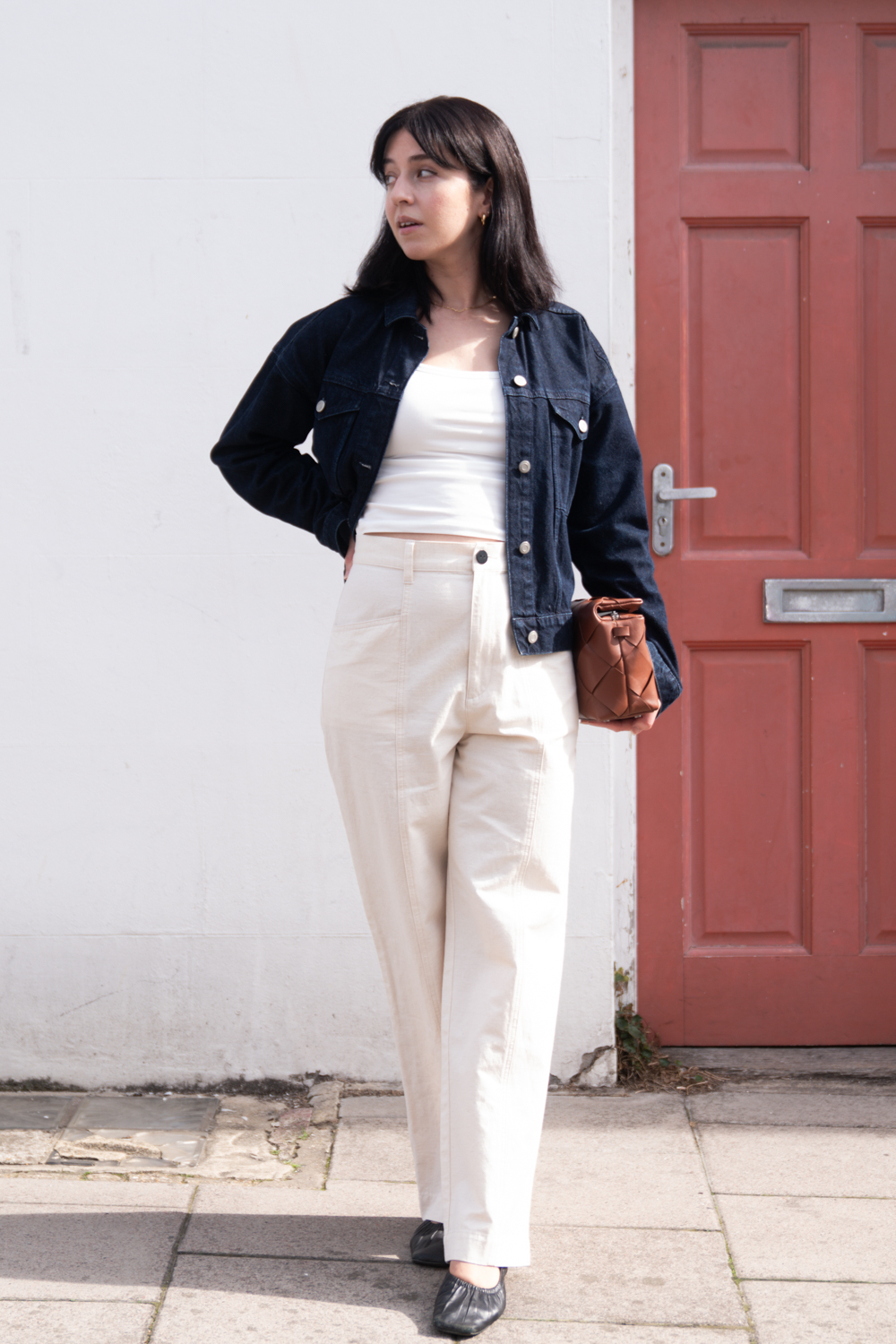
I love linen. It holds its form beautifully, just like my Tove & Libra trousers pictured (gifted). It’s also incredibly strong, and that makes it great to wear over and over and over. And, it gets softer with every wash, adding to its value over time. Could it be any better?
Organic Cotton
Next up, organic cotton. This is one of my favourite fibres as it’s so soft and versatile, but there is a huge sliding scale of impact when it comes to cotton.
Cotton on its own is a tricky fabric to label as sustainable because it takes SO MUCH WATER to produce. A simple white t-shirt and a pair of jeans can take 20,000 litres of water to make – that’s 13 years of drinking water! Cotton’s thirsty nature has been known to cause environmental disasters such as the draining of the Aral Sea.
Cotton may also be grown with pesticides, and/or treated with known human carcinogens. It’s why I recommend GOTS-certified organic cotton garments over standard cotton alone. This is the gold standard of organic certification for cotton, and other organic fibres. Check out my guide to organic cotton for a deeper dive on certifications and production.
Denim
So, I basically live in denim. If I’m not in a skirt, I’m in jeans. They’re just so easy to wear! But did you know, there are more pairs of jeans on the planet than there are people? That’s a lot of denim. And denim is made from cotton, which means that’s millions of litres of water spent on making jeans…
I wrote a guide to sustainable jeans and denim a while ago which really goes into this, but the main things to do when buying sustainable denim are:
- Choose denim made using closed-loop water systems (saves 1000s of gallons of water)
- Go for jeans that promote circularity, such as using a percentage of recycled fibres, or ones that can be mended or sent back for recycling
- Avoid stonewash – it’s created using toxic methods and weakens the denim
- Avoid rips and tears – it can deteriorate more quickly than regular denim
- Have only one or two pairs of jeans, and wear the hell out of them.
Peace Silk
Peace silk is another newly-innovated sustainable fabric. Did you know, traditional silk is made by insects? Silk is made by silkworms when they make their cocoons, which are then collected by hand, boiled, and spun into threads. Yes, you read that right – the boiling process kills silkworms in their cocoons before they’ve developed into moths. And it takes around 5,000 silkworms to make a pure silk kimono… So it’s not a vegan material, nor a cruelty-free one.
Peace silk is a relatively new answer to this. Silkworms are given the time to develop into moths, and their empty cocoons are then collected to create peace silk. The softness, and glossiness, may vary, but so does silk.
Cupro
If you’d prefer a vegan, silk-like material that’s much more widely available, cupro may be your answer. Cupro is a circular fibre, meaning it has been made from recycled garments. It is a rayon fibre made from cellulose (usually cotton) that is dissolved in cuprammonium solution.
Now, the last part of that process is the troubling part – cuprammonium requires copper, ammonia, and caustic soda, which can be harmful to workers and toxic when they’re not disposed of properly.
However, when made responsibly, cupro is a great alternative to silk. It’s fine, sheer, and can feel soft to the touch. It’s a step in the right direction when it comes to recycling, but it would be great to see the chemical process changed in the future.
Leather (& Vegan Leather)
In 2022, I explored the worlds of leather and vegan leather at length. Could either be sustainable? Yes – and no. Fashion is complicated!
Leather will always be a co-product of the meat industry. And vegan leather? Almost all of it is made with plastic. Saying that, there are incredible fashion brands innovating with repurposed leather or bio-based vegan leathers. It’s up to you to make your mind up about these, but I personally enjoy wearing bags, shoes, and accessories made with a range of these.
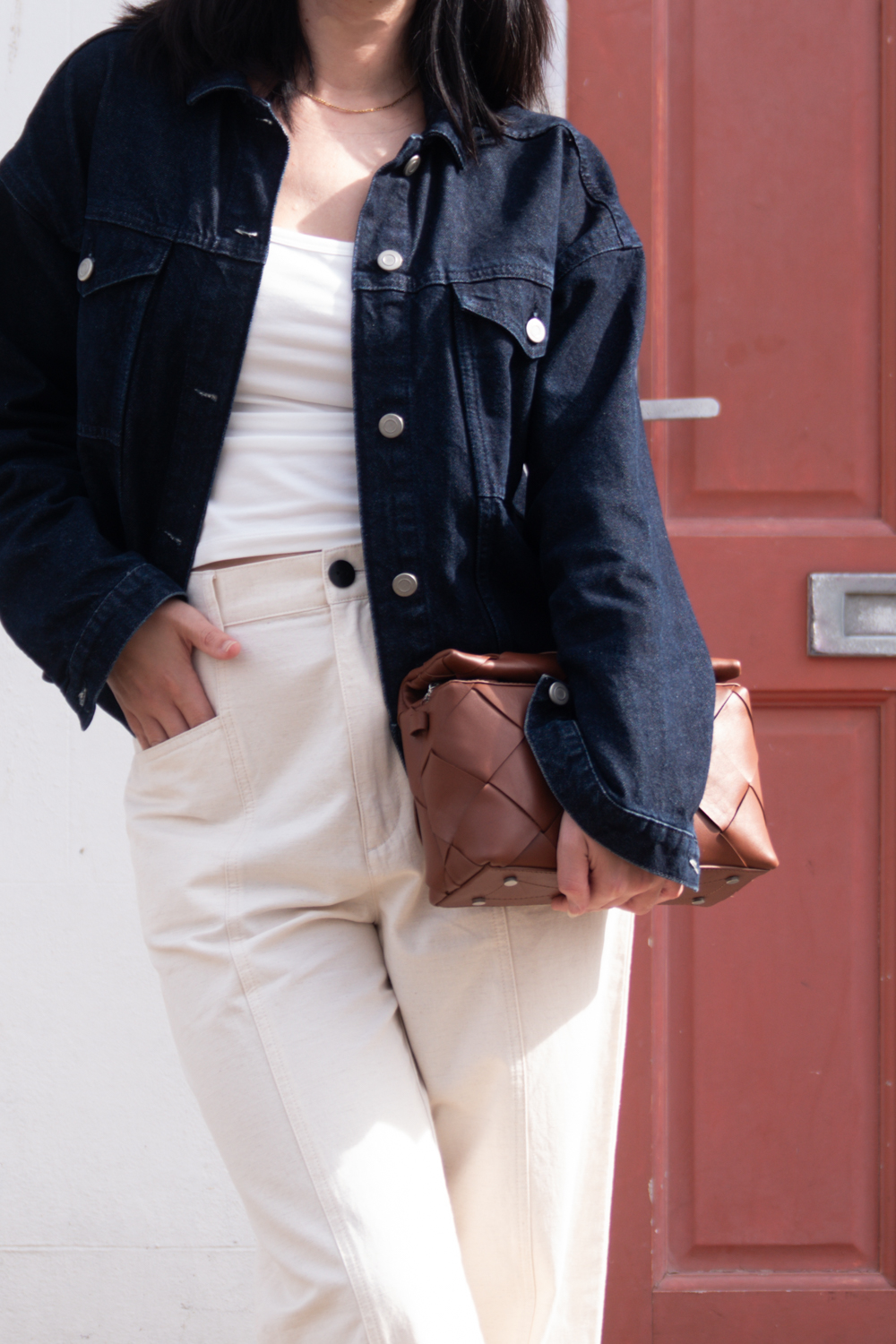
This écotorie bag pictured here (on loan) is made from upcycled leather already in existence.

Wool
Wool is another natural material, and another with issues! I personally love wool, as it’s grown naturally by sheep, goats, alpacas, etc. and creates really warm, high quality clothing. It’s also biodegradable (just ensure it’s not blended with plastic-based fibres). But when it comes to putting it in the sustainable fabrics list, there’s a few things to consider first:
- Treatment of wool-growing animals
- Higher emissions associated with cultivating wool (compared to plant-based materials)
While I believe there are a number of sustainable knitwear brands out there that aim to treat their wool-bearing animals well and produce their clothing sustainably, ascertaining the welfare of animals as a whole is difficult. If you’re vegan, or simply unsure, I’d recommend avoiding it.

Recycled Nylon (aka Econyl)
Now we come onto recycled fibres, and the only oil-based material on my list. Nylon is made from oil, and is a plastic fibre. However, for certain garments such as swimwear, it’s an incredibly useful material and one that is difficult to avoid altogether.
That’s where recycled nylon comes in! Made from recycled plastic (often plastic bottles, fishing net, and other easily-recycled plastic items), it’s the sustainable answer for bikinis, rainwear, and other items too. Just make sure to use a Guppyfriend Wash Bag* if you’re washing nylon garments to prevent shedding microfibres from entering our waterways.
Bamboo / Ecovero / Lyocell / Modal / Tencel / Rayon / Viscose
I also wanted to include tree-based fabrics in this list, and my goodness there are so many of them! Put simply, all of these fabrics are derived from tree-pulp, and then processed chemically until they become soft, wearable fibres.
Some of these are better than others – in my guide to bamboo clothing, I noted that both lyocell and rayon are made from bamboo, but one is treated with harsher chemicals than the other, and often these chemicals end up polluting waterways. In 2026, I’m no closer to really deciding what is best, and honestly I try to avoid these fabrics where natural fibres could do the job instead.
Hemp
Finally, hemp. Yes, it is the stereotypical hippy-dippy fibre that people tend to think of when they hear ‘sustainable fashion’, but aside from that, it’s on-par with linen when it comes to its sustainability credentials.
Hemp has been grown and spun into fibre for thousands of years. It grows fast, can be grown in the UK, and has so many uses – I even enjoy drinking hemp milk and cooking with hemp oil! Pure hemp fibre has a very similar feel to linen, although it is often mixed with cotton or lyocell to produce a softer fabric.
Seven Not-So Sustainable Fabrics To Avoid
As an addition to my list of good fabrics, I also wanted to list out a few of the materials I avoid:
- Acrylic
- Elastane (a.k.a. Spandex or Lycra)
- Nylon
- Polyamide
- Polyester
- Polyurethane
- Sequins
All of these are made using oil (yes, nasty petroleum) which means they’re made from fossil fuel, extracted from the ground often in a catastrophic way, processed into a plastic thread, and then woven into wearable fabric. When they’re washed, the shed microfibres. And when they’re thrown away, they take hundreds of years to degrade. Avoid, avoid, avoid.
